
Science is full of technical terms that may sound difficult at first, but many of them explain things we see every day. One important science term students often encounter is photosynthesis.
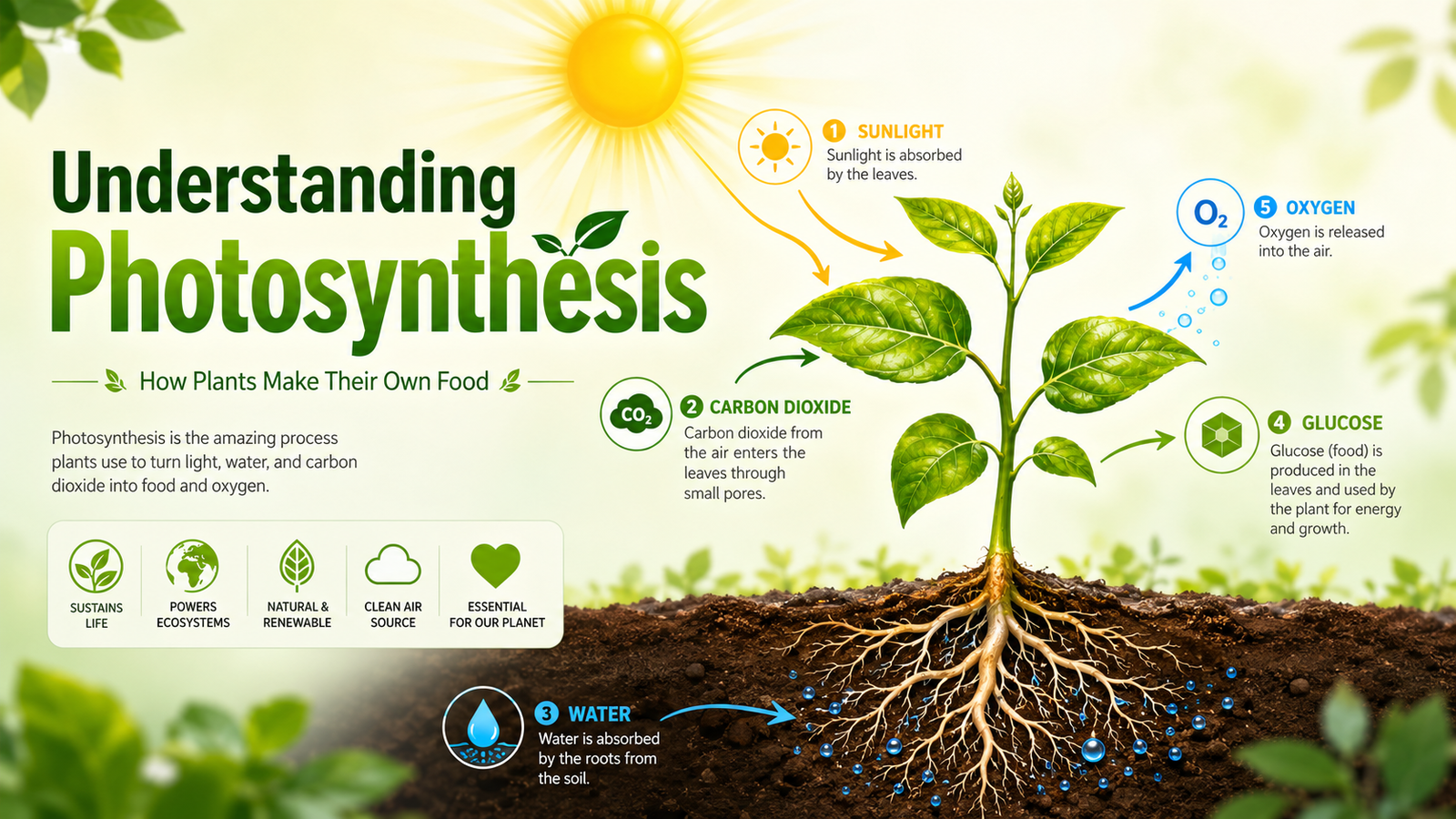
Photosynthesis is the process by which plants make their own food using sunlight, water, and carbon dioxide. It is a key topic in biology because it helps explain how plants grow, how oxygen is produced, and how living things depend on one another.
What Is Photosynthesis?
Photosynthesis happens mainly in the leaves of plants. Leaves contain a green pigment called chlorophyll, which helps absorb sunlight.
During photosynthesis, plants take in:
- Sunlight from the sun
- Water from the soil through their roots
- Carbon dioxide from the air
Using these, plants produce glucose, a type of sugar that serves as their food. They also release oxygen, which humans and animals need to breathe.
A simple way to remember photosynthesis is:
Sunlight + Water + Carbon Dioxide → Glucose + Oxygen
Why Photosynthesis Matters
Photosynthesis is important because it supports life on Earth. Plants are food sources for many animals and humans. They also produce oxygen, which is necessary for survival.
Without photosynthesis, ecosystems would not function properly. Food chains would be affected, oxygen levels would decrease, and many living organisms would struggle to survive.
Common Student Challenges
Many students find photosynthesis confusing because it includes several terms and steps. Words like chlorophyll, glucose, carbon dioxide, and oxygen may be difficult to remember at first.
Students may also mix up what plants take in and what plants produce. A helpful study habit is to organize the process into two groups:
Plants need: sunlight, water, and carbon dioxide
Plants produce: glucose and oxygen
How to Study Photosynthesis Effectively
Students can understand photosynthesis better by using simple review strategies. Drawing a diagram of a plant can help show where sunlight, water, and carbon dioxide enter. Writing the word equation repeatedly can also improve memory.
Practice questions are especially useful because they help students apply what they know. For example, a question may ask what will happen if a plant does not receive enough sunlight or water.
How Assemulator Can Help
Assemulator can support students by giving them a structured way to review science terms like photosynthesis. Through online practice questions, students can test their understanding, identify weak areas, and review important concepts before exams.
For teachers, Assemulator can also be useful for organizing science review materials and helping students prepare more consistently.