
What Is an Archipelago?
An archipelago is a group or chain of islands surrounded by water. These islands may be close together or spread across a large body of water. In Philippine Social Studies, the word “archipelago” is very important because it describes the physical form of our country.
The Philippines is an archipelago made up of more than 7,000 islands. These islands are surrounded by major bodies of water such as the Pacific Ocean, West Philippine Sea, Sulu Sea, and Celebes Sea.
Why Is the Philippines Called an Archipelago?
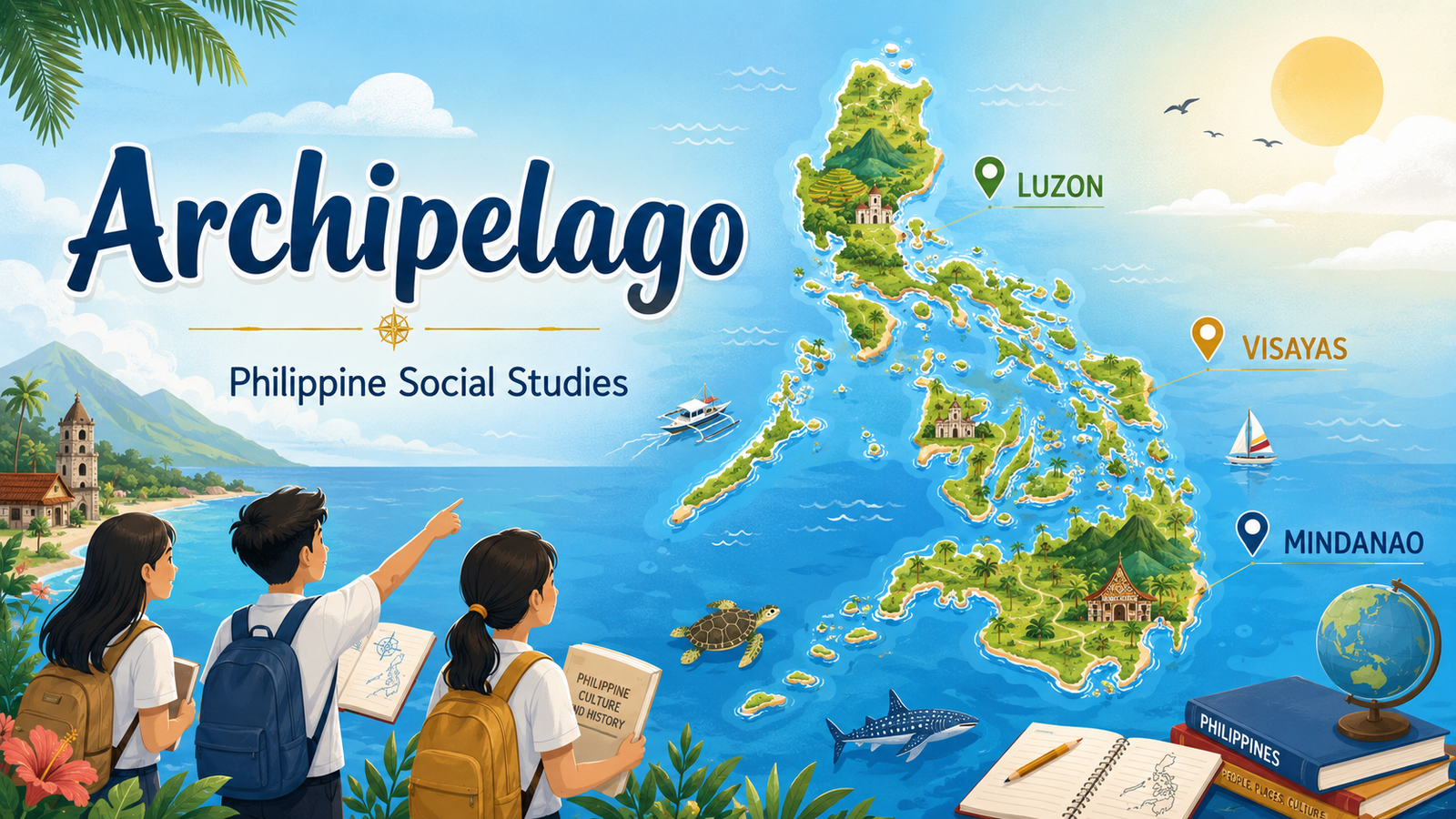
The Philippines is called an archipelago because it is not one large landmass. Instead, it is composed of many islands grouped into three major island groups:
- Luzon – the largest island group, where the capital city Manila is located
- Visayas – a central group of islands known for many coastal communities and tourist destinations
- Mindanao – the southern island group, rich in natural resources and cultural diversity
Because these islands are separated by water, the geography of the Philippines greatly affects how people live, travel, trade, and communicate.
How Archipelagic Geography Affects Filipino Life
1. Transportation and Travel
Since the Philippines has many islands, people often travel by boats, ferries, ships, and airplanes. Traveling from one province to another may require crossing seas. This is why ports and airports are important in connecting communities.
2. Livelihood and Economy
Many Filipinos depend on the sea for their livelihood. Fishing, aquaculture, tourism, shipping, and marine trade are common in many coastal areas. The country’s waters provide food, jobs, and economic opportunities.
3. Culture and Language
Because the islands are separated by water, different communities developed their own languages, traditions, foods, and customs. This is one reason why the Philippines has a rich and diverse culture. People from different islands may speak different languages, but they share a common Filipino identity.
4. Natural Resources
As an archipelago, the Philippines has many natural resources from both land and sea. These include fish, coral reefs, beaches, forests, minerals, and fertile lands. However, these resources must be protected from pollution, overfishing, illegal logging, and climate-related disasters.
5. National Unity
Being an archipelago can make communication and transportation challenging, especially for remote islands. However, it also teaches Filipinos the importance of cooperation, connection, and unity. Roads, bridges, ports, internet access, and disaster response systems help bring the islands closer together.
Why Students Should Learn About the Philippine Archipelago
Understanding the Philippines as an archipelago helps students appreciate the country’s geography, history, culture, and identity. It explains why communities have different ways of living and why the sea plays an important role in Filipino life.
It also helps students understand important issues such as disaster preparedness, environmental protection, transportation, trade, and national development.
Conclusion
The Philippines is an archipelago made up of thousands of islands surrounded by water. This island geography shapes the way Filipinos live, work, travel, and interact with one another. In Social Studies, learning about the archipelago helps us understand not only the physical features of the country but also the culture, livelihood, and unity of the Filipino people.