
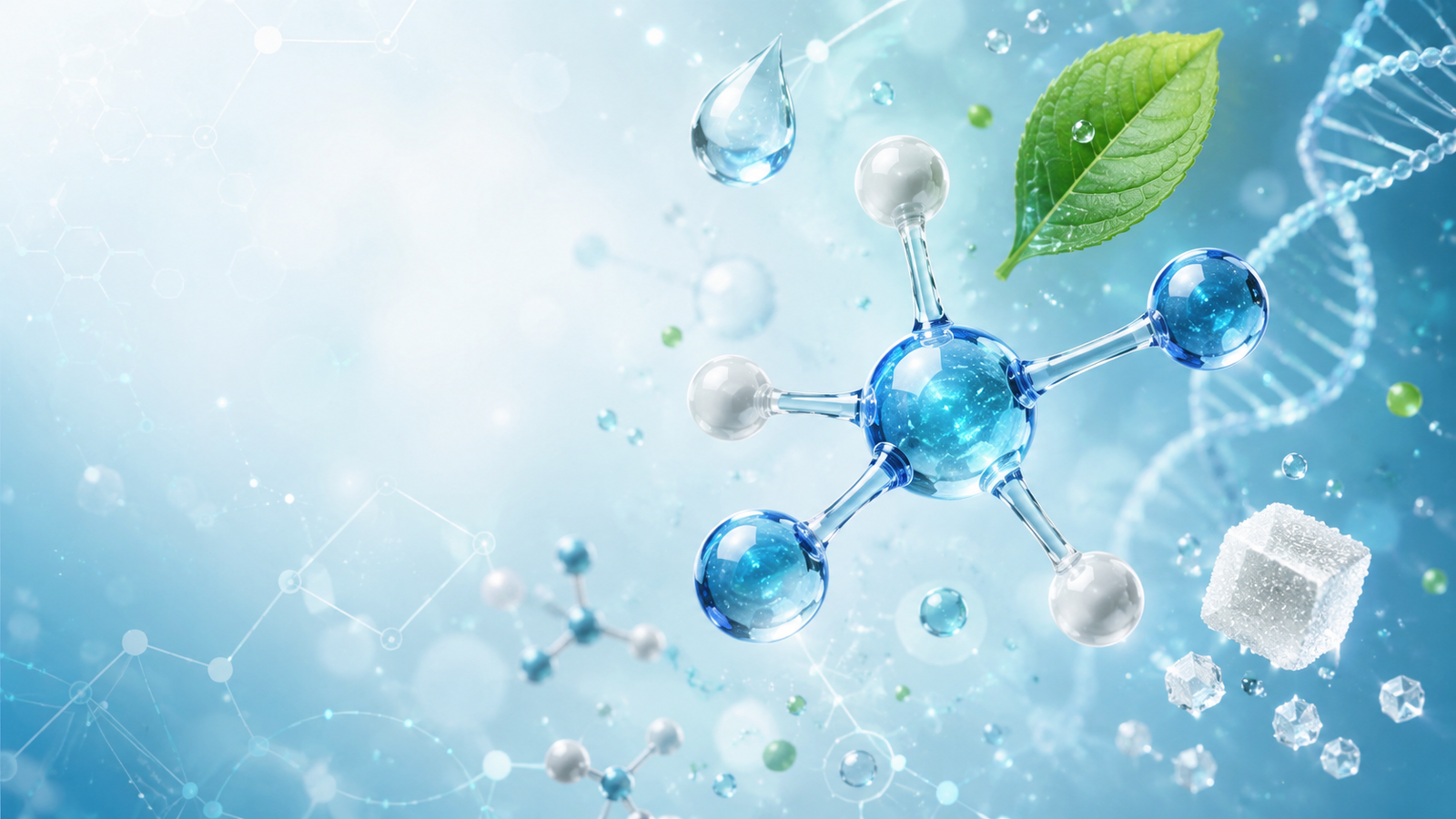
Look closely at a glass of water, a leaf, a spoonful of sugar, or even the air you breathe. They may seem simple, but each one is made of countless tiny structures called molecules. These molecules are so small that we cannot see them with our eyes, yet they help build the world around us.
What Is a Molecule?
A molecule is a group of two or more atoms joined together by chemical bonds. Atoms are the basic building blocks of matter, and when they connect in specific ways, they form molecules.
For example, water is made of molecules called H₂O. Each water molecule contains:
2 hydrogen atoms
1 oxygen atom
That tiny combination creates the liquid we drink, use for cleaning, and depend on for life.
Why Molecules Matter
Molecules are important because they determine the properties of substances. The way atoms are arranged in a molecule affects how that substance looks, feels, reacts, smells, tastes, and behaves.
Sugar tastes sweet because of the structure of its molecules. Oxygen supports breathing because of the way oxygen molecules interact with our bodies. Plastic is flexible or hard depending on the molecules used to make it.
In other words, molecules are not just small particles. They are the hidden design behind matter.
Simple and Complex Molecules
Some molecules are very simple. Oxygen gas, which we breathe, is made of two oxygen atoms bonded together. Its formula is O₂.
Other molecules are much more complex. Proteins, DNA, and carbohydrates contain many atoms arranged in detailed patterns. These large molecules are essential for living things. They help cells function, store genetic information, and provide energy.
A single molecule can be simple enough to describe in three letters, like H₂O, or complex enough to help explain how life works.
Molecules in Everyday Life
Molecules are everywhere, even when we do not notice them.
The scent of perfume comes from molecules traveling through the air and reaching your nose. The flavor of food depends on molecules interacting with taste receptors. Soap works because its molecules can attach to both oil and water, helping remove dirt from your skin.
Even emotions have a connection to molecules. Chemicals in the brain, such as dopamine and serotonin, help influence mood, motivation, and feelings of well-being.
How Molecules Are Formed
Molecules form when atoms bond together. These bonds happen because atoms become more stable when they share, gain, or lose electrons.
There are different types of chemical bonds, but two common ones are:
Covalent bonds, where atoms share electrons
Ionic bonds, where atoms transfer electrons and attract each other because of opposite charges
These bonds are what hold molecules together and allow them to keep their shape.
Molecules and Learning Science
Understanding molecules helps students make sense of chemistry, biology, physics, health science, and environmental studies. Many scientific topics become easier when we remember that large changes often begin at a very small level.
When ice melts, molecules move differently. When food is cooked, molecules change. When medicine works in the body, molecules interact with cells.
Learning about molecules helps connect classroom science to real-life experiences.
Final Thoughts
A molecule may be incredibly small, but its role is enormous. Molecules make up the water we drink, the food we eat, the air we breathe, and the bodies we live in. They explain why substances behave differently and why life is possible.
The next time you see a drop of water or smell a flower, remember that countless molecules are working quietly behind the scenes. Science often begins with the things we cannot see, and molecules are one of the best examples of how the smallest structures can make the biggest difference.