
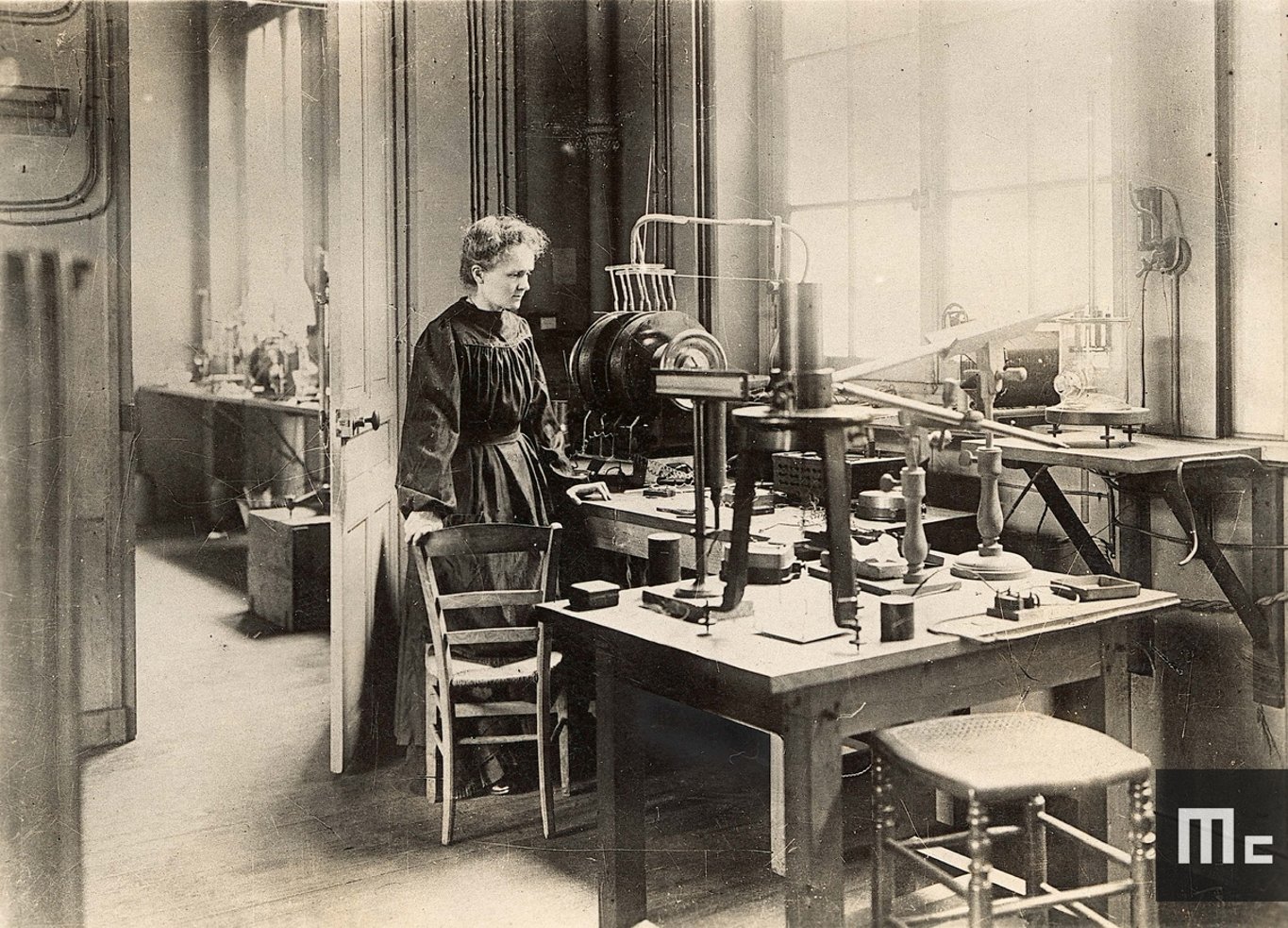
Marie Curie is one of the most inspiring scientists in history. She is best known for her groundbreaking work on radioactivity, a discovery that changed science, medicine, and technology.
Her story is not only about scientific achievement. It is also about determination, discipline, and the courage to keep learning despite many challenges. For students, Marie Curie’s life is a powerful reminder that dedication and curiosity can open doors to discovery.
Who Was Marie Curie?
Marie Curie was born as Maria Skłodowska on November 7, 1867, in Warsaw, Poland. At that time, opportunities for women in higher education were limited, but she continued to pursue learning.
She later moved to Paris, France, where she studied at the University of Paris, also known as the Sorbonne. There, she focused on physics and mathematics and began the scientific work that would make her famous around the world.
Her Work on Radioactivity
Marie Curie became known for her research on radioactivity, a term she helped popularize through her work. Together with her husband, Pierre Curie, she studied materials that gave off invisible energy.
Their research led to the discovery of two elements: polonium and radium. Polonium was named after Poland, Marie Curie’s homeland, while radium became important in scientific and medical research.
Her discoveries helped scientists better understand atoms and energy. They also contributed to future developments in medical treatments, especially in the use of radiation for diagnosing and treating diseases.
A Life of Firsts
Marie Curie achieved many historic firsts. She became the first woman to win a Nobel Prize. She was also the first person to win Nobel Prizes in two different scientific fields: Physics and Chemistry.
These achievements were remarkable, especially during a time when women often faced barriers in education and science. Curie’s success helped inspire future generations of women and students to pursue science.
Challenges and Perseverance
Marie Curie’s journey was not easy. She faced financial struggles, limited opportunities, and the difficulties of working in demanding laboratory conditions.
Despite these challenges, she continued her research with focus and patience. Her dedication shows that meaningful success often requires persistence, sacrifice, and a strong commitment to learning.
Why Marie Curie Still Matters Today
Marie Curie’s work continues to influence science and medicine. Her research helped build the foundation for nuclear physics, cancer treatment, and medical imaging.
Beyond her scientific discoveries, she remains a symbol of perseverance and intellectual courage. Her life encourages students to keep asking questions, work hard, and believe that learning can make a difference.
Lessons Students Can Learn From Marie Curie
Students can learn many valuable lessons from Marie Curie’s life:
- Stay curious. Important discoveries often begin with questions.
- Work with discipline. Consistent effort helps turn ideas into achievements.
- Do not let barriers stop you. Challenges can be overcome with determination.
- Value education. Learning can create opportunities and change lives.
- Use knowledge to help others. Science becomes more meaningful when it benefits people.
Conclusion
Marie Curie changed the world through her discoveries, courage, and dedication to science. Her work on radioactivity opened new paths in research and medicine, while her life inspired countless learners around the world.
For students preparing for exams or building better study habits, Marie Curie’s story is a reminder that success is built through curiosity, patience, and perseverance. Like Curie, every learner can make progress by asking questions, studying consistently, and believing in the value of knowledge.