
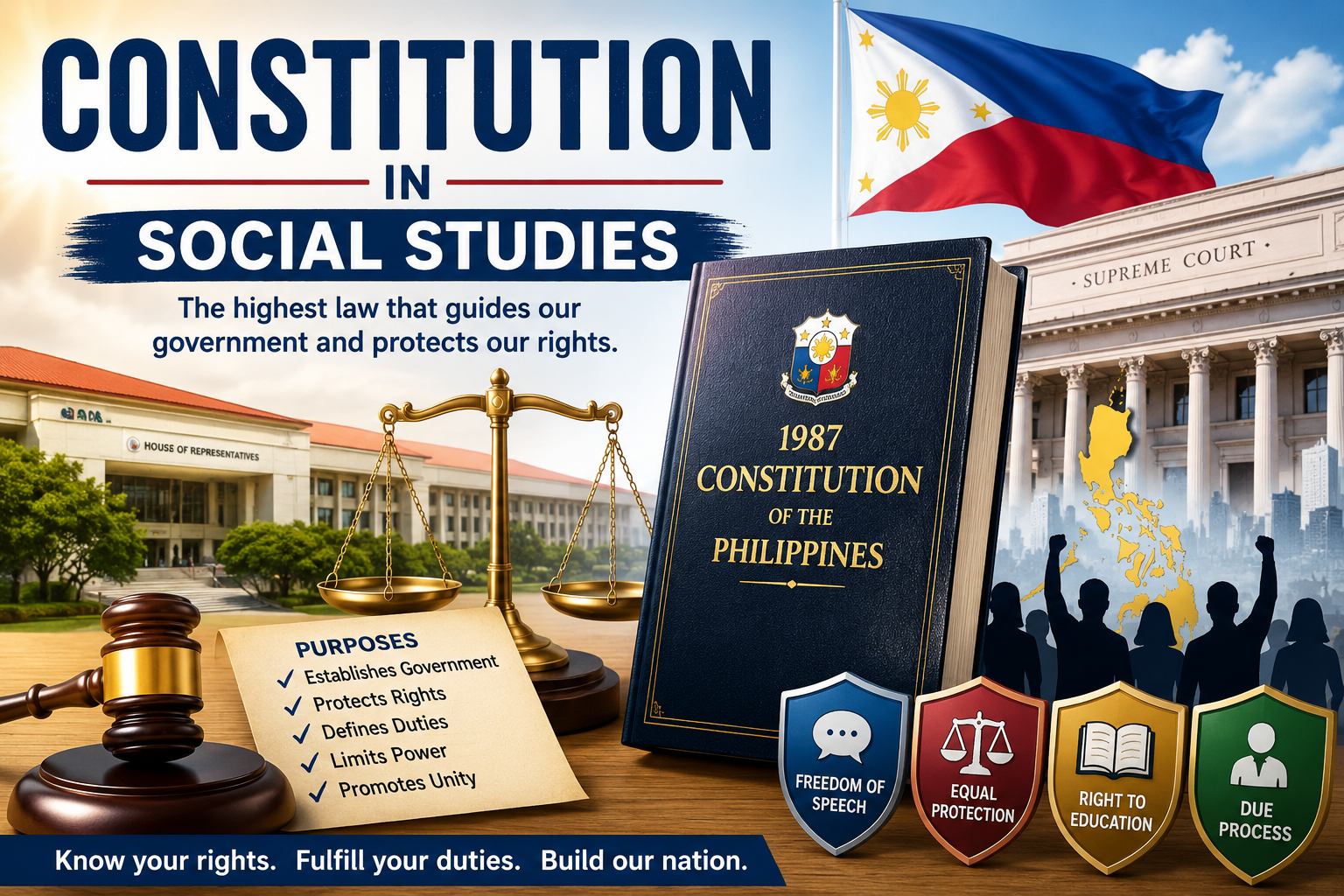
What Is a Constitution?
A constitution is the highest law of a country. It explains how the government is organized, what powers leaders have, and what rights and responsibilities citizens possess.
In Social Studies, the constitution is an important topic because it helps students understand how a country is governed and how people are protected by law. It serves as a guide for leaders, government institutions, and citizens.
Why Is the Constitution Important?
The constitution is important because it provides rules that help keep society organized, fair, and peaceful. Without a constitution, government leaders could make decisions without clear limits or accountability.
A constitution helps ensure that power is not abused. It also protects the rights of the people and reminds citizens of their duties to the country.
Main Purposes of a Constitution
1. It Establishes the Government
The constitution explains the structure of government. It identifies the major branches of government and their roles.
In the Philippines, the government has three main branches:
Executive Branch – carries out and enforces laws
Legislative Branch – creates laws
Judicial Branch – interprets laws and settles legal disputes
This system helps divide power so that no single branch becomes too powerful.
2. It Protects the Rights of Citizens
A constitution contains rights that protect people from abuse and unfair treatment. These may include the right to life, freedom of speech, freedom of religion, education, due process, and equal protection under the law.
These rights are important because they allow citizens to live with dignity, security, and freedom.
3. It Defines Duties and Responsibilities
The constitution does not only discuss rights. It also reminds citizens that they have responsibilities. These include obeying the law, respecting the rights of others, paying proper taxes, protecting the environment, and participating responsibly in civic life.
A strong society depends not only on good leaders but also on responsible citizens.
4. It Limits Government Power
One of the most important purposes of a constitution is to limit the power of government. Leaders must follow the law and respect the rights of the people.
This is why constitutions often include checks and balances. Each branch of government has its own role and can help prevent abuse by the other branches.
5. It Promotes Unity and National Identity
A constitution reflects the values, goals, and principles of a nation. It may describe the country’s beliefs about democracy, justice, freedom, equality, and national unity.
For students, learning about the constitution helps develop a deeper understanding of citizenship and love of country.
The Constitution and Filipino Citizenship
In Philippine Social Studies, the Constitution is closely connected to citizenship. It helps Filipinos understand their rights, duties, and role in nation-building.
The Philippine Constitution guides how the country is governed and protects the freedoms of the Filipino people. It also reminds citizens that democracy works best when people are informed, active, and responsible.
Why Students Should Learn About the Constitution
Students should learn about the constitution because it affects everyday life. It helps explain why people have rights, why laws must be followed, and why government officials have limits.
By studying the constitution, students become more aware of their role as citizens. They learn how to respect others, participate in their community, and understand national issues more responsibly.
Conclusion
The constitution is the highest law of a country and an important foundation of government and citizenship. It establishes government structure, protects citizens’ rights, defines responsibilities, limits government power, and promotes unity.
In Social Studies, learning about the Constitution helps students understand how democracy works and why responsible citizenship is essential in building a just and peaceful society.