
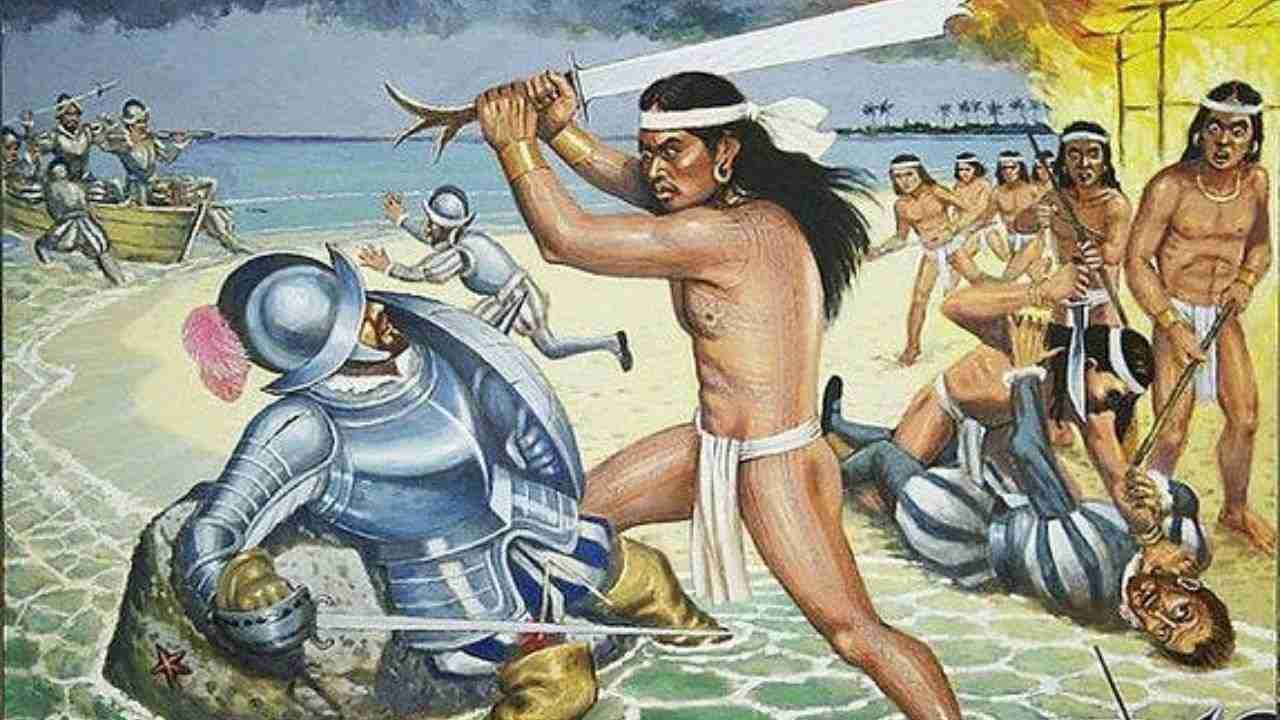
Lapu-Lapu is one of the earliest and most celebrated heroes in Philippine history. He is remembered as the brave leader of Mactan who resisted foreign domination and defended his people’s freedom. His story is often connected to courage, leadership, and the Filipino spirit of independence.
For students, learning about Lapu-Lapu helps explain an important moment in early Philippine history: the arrival of Ferdinand Magellan and the Battle of Mactan in 1521.
Who Was Lapu-Lapu?
Lapu-Lapu was a datu, or local chieftain, of Mactan Island in Cebu. During his time, communities in the Philippines were led by local rulers who governed their own people and formed alliances or rivalries with nearby leaders.
Unlike some local rulers who accepted Spanish influence, Lapu-Lapu refused to submit to foreign control. He valued the independence of his community and chose to defend it when challenged.
The Arrival of Magellan
In 1521, Portuguese explorer Ferdinand Magellan arrived in the Philippines while leading a Spanish expedition. Magellan formed alliances with some local leaders in Cebu and encouraged them to accept Christianity and Spanish authority.
However, Lapu-Lapu did not recognize Magellan’s authority over Mactan. This disagreement eventually led to conflict.
The Battle of Mactan
The Battle of Mactan took place on April 27, 1521. Magellan and his men attempted to attack Mactan, but Lapu-Lapu and his warriors resisted. The battle ended with the defeat of Magellan’s forces, and Magellan was killed.
This victory made Lapu-Lapu a symbol of native resistance against foreign domination. It showed that local communities were willing to defend their freedom and way of life.
Why Lapu-Lapu Is Remembered as a Hero
Lapu-Lapu is honored because he stood up for his people at a time when foreign powers were beginning to enter the islands. His courage made him a powerful symbol of independence and resistance.
Although historical records about his life are limited, his legacy continues to inspire Filipinos. He represents bravery, leadership, and the importance of protecting one’s community.
Lessons Students Can Learn from Lapu-Lapu
Lapu-Lapu’s story teaches several important lessons.
First, courage means standing up for what is right. Lapu-Lapu defended his people even when facing a foreign force with weapons and military experience.
Second, leadership requires responsibility. As a datu, he protected the welfare and independence of his community.
Third, history should be studied carefully. Since much of what we know about Lapu-Lapu comes from limited accounts, students should learn to separate historical facts from legends.
Finally, freedom is valuable. Lapu-Lapu’s resistance reminds us that independence and dignity are worth protecting.
Why Lapu-Lapu Still Matters Today
Lapu-Lapu remains important because he is one of the earliest symbols of Filipino resistance. His story continues to be taught in schools, remembered in monuments, and celebrated in cultural events.
For modern students, Lapu-Lapu’s life encourages pride in Filipino history and identity. It reminds learners that the desire for freedom existed long before the Philippines became a nation.
Conclusion
Lapu-Lapu’s victory at the Battle of Mactan made him a lasting figure in Philippine history. As a leader who resisted foreign control, he became a symbol of courage, independence, and love for one’s people.
By studying Lapu-Lapu, students can better understand the early history of the Philippines and the importance of defending freedom, dignity, and community.