
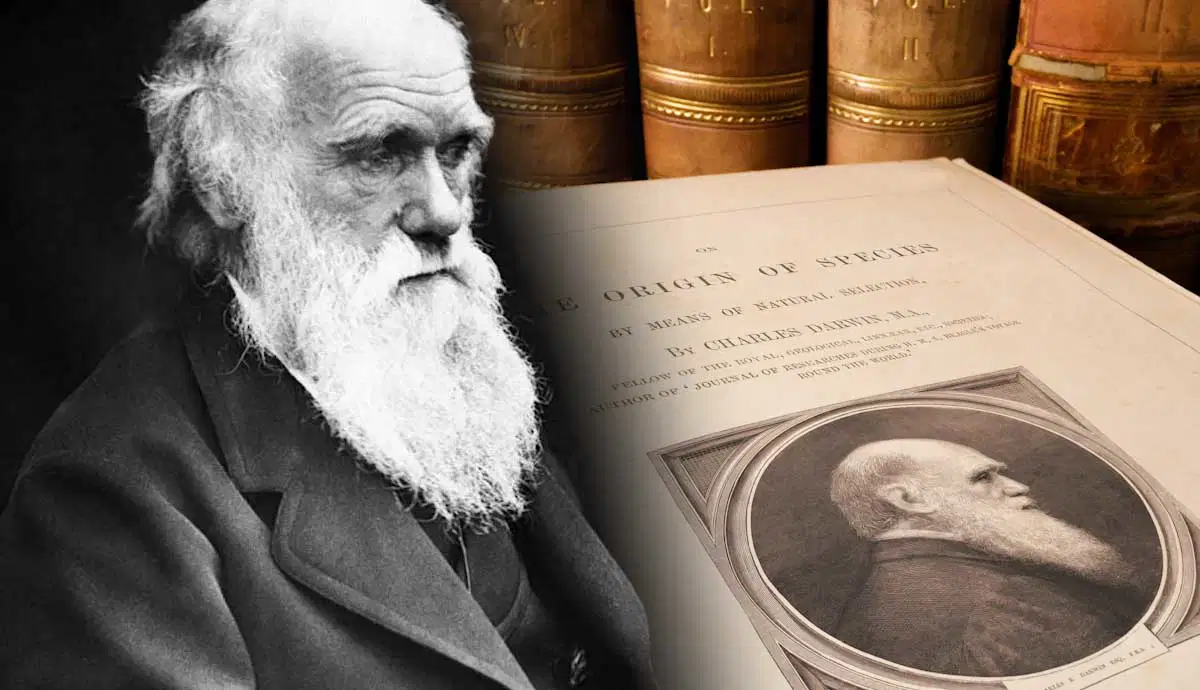
Charles Darwin is one of the most important scientists in history. He is best known for his theory of evolution by natural selection, an idea that changed how people understand living things and their connection to the natural world.
For students, Darwin’s story is not only about biology. It is also about careful observation, patience, evidence-based thinking, and the courage to explore difficult questions.
Who Was Charles Darwin?
Charles Darwin was born on February 12, 1809, in Shrewsbury, England. From a young age, he was interested in nature, animals, plants, and collecting specimens.
Although he first studied medicine and later prepared for a career in the church, Darwin’s real passion was natural history. His curiosity about the living world eventually led him to become one of the most influential figures in science.
The Voyage of the HMS Beagle
One of the most important events in Darwin’s life was his journey aboard the HMS Beagle. The voyage began in 1831 and lasted nearly five years.
During this journey, Darwin visited many places, including South America and the Galápagos Islands. He observed animals, plants, fossils, and geological formations. These observations helped him think deeply about how species change over time.
The Galápagos Islands became especially important because Darwin noticed differences among animals, such as finches and tortoises, from island to island. These differences helped shape his ideas about adaptation and evolution.
The Theory of Natural Selection
Darwin’s most famous idea is natural selection. This theory explains how living things with helpful traits are more likely to survive, reproduce, and pass those traits to the next generation.
Over long periods of time, this process can lead to changes in species. Natural selection helps explain why organisms are suited to their environments and how life on Earth has become so diverse.
Darwin published his ideas in 1859 in his famous book, On the Origin of Species. The book became one of the most influential scientific works ever written.
Why Darwin’s Ideas Were Important
Before Darwin, many people believed species did not change over time. Darwin’s work introduced a scientific explanation for how species could develop, adapt, and share common ancestry.
His theory helped build the foundation of modern biology. Today, evolution is important in many areas of science, including genetics, medicine, ecology, agriculture, and conservation.
Challenges and Careful Thinking
Darwin did not rush to publish his theory. He spent many years collecting evidence, studying specimens, and refining his ideas. He knew his theory would be controversial, so he worked carefully to support it with observations and reasoning.
His patience shows students the value of evidence-based learning. Strong ideas are built through research, testing, and careful explanation.
Lessons Students Can Learn From Darwin
Students can learn many valuable lessons from Darwin’s life:
- Observe carefully. Small details can lead to big discoveries.
- Ask questions. Curiosity helps deepen understanding.
- Use evidence. Good learning is supported by facts and reasoning.
- Be patient. Important ideas often take time to develop.
- Keep an open mind. Learning grows when we are willing to reconsider old beliefs.
Why Charles Darwin Still Matters Today
Darwin’s ideas continue to shape how scientists study life. His work helps explain biodiversity, adaptation, disease resistance, and the relationship between living organisms and their environments.
For students preparing for exams, Darwin’s story is a useful reminder that science is not just about memorizing terms. It is about understanding patterns, asking thoughtful questions, and using evidence to explain the world.
Conclusion
Charles Darwin changed the way people understand life on Earth. His theory of evolution by natural selection remains one of the most important ideas in science.
Darwin’s life teaches students that curiosity, observation, patience, and evidence-based thinking are powerful tools for learning. By studying carefully and asking meaningful questions, every learner can develop a deeper understanding of the world around them.