
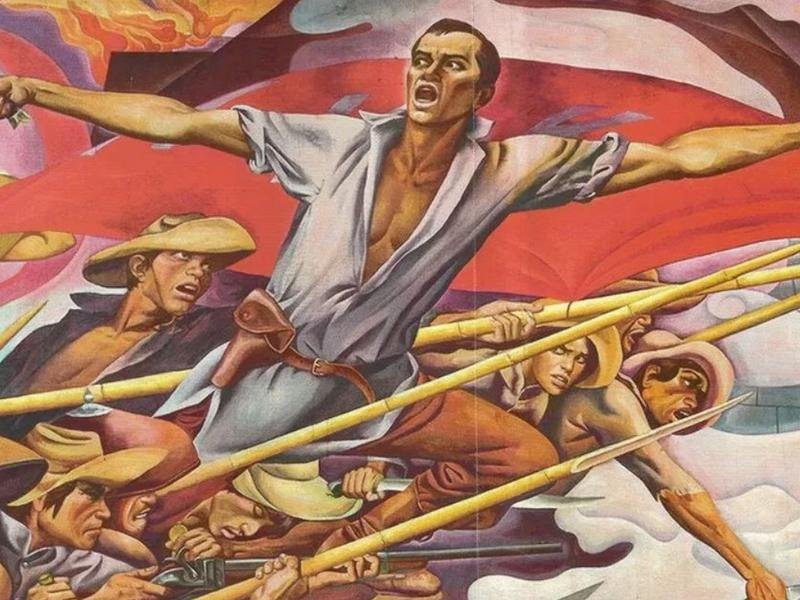
Andrés Bonifacio is one of the most important heroes in Philippine history. Known as the “Father of the Philippine Revolution,” he helped awaken the courage of Filipinos to fight for freedom from Spanish rule. His story is a powerful reminder that heroism is not only found in wealth, education, or social status, but also in courage, sacrifice, and love for one’s country.
For students, learning about Bonifacio helps explain how the Philippine Revolution began and why ordinary Filipinos played a major role in the country’s struggle for independence.
Who Was Andrés Bonifacio?
Andrés Bonifacio y de Castro was born on November 30, 1863, in Tondo, Manila. Unlike some Filipino reformists who came from wealthy families, Bonifacio experienced hardship early in life. After losing his parents, he helped support his siblings by working various jobs.
Even though he had limited formal education, Bonifacio was a dedicated reader. He studied books about history, revolution, politics, and society. His self-education helped shape his ideas about freedom and justice.
Founding of the Katipunan
Bonifacio is best known as one of the founders of the Kataastaasang Kagalanggalangang Katipunan ng mga Anak ng Bayan, commonly called the Katipunan or KKK. Founded in 1892, the Katipunan was a secret revolutionary organization that aimed to gain independence from Spain.
The group encouraged Filipinos to unite, organize, and prepare for revolution. It used symbols, codes, ceremonies, and writings to spread patriotic ideas and protect its members from Spanish authorities.
Through the Katipunan, Bonifacio helped turn the desire for reform into a movement for independence.
The Cry of Pugad Lawin
One of the most famous events linked to Bonifacio is the Cry of Pugad Lawin in August 1896. During this event, members of the Katipunan tore their cedulas, or residence certificates, as a sign of defiance against Spanish rule.
This act symbolized the start of open resistance and marked a turning point in the Philippine Revolution. It showed that Filipinos were ready to risk their lives for freedom.
Bonifacio as a Revolutionary Leader
Bonifacio became known for his bravery, determination, and strong belief in independence. He helped organize revolutionary forces and inspired many Filipinos to join the cause.
He was also a writer. One of his well-known works, “Pag-ibig sa Tinubuang Lupa”, expressed deep love for the homeland and encouraged Filipinos to value freedom and sacrifice.
Although Bonifacio faced challenges as a military leader, his greatest contribution was his ability to inspire ordinary people to believe that independence was possible.
A Complex and Tragic Legacy
Bonifacio’s life ended in conflict within the revolutionary movement. Tensions between revolutionary factions led to the Tejeros Convention in 1897, where leadership disputes arose. Bonifacio was later arrested, tried, and executed by fellow revolutionaries.
His death remains one of the most debated and tragic events in Philippine history. It reminds students that national struggles are often complicated, and that unity is essential during times of crisis.
Lessons Students Can Learn from Andrés Bonifacio
Bonifacio’s life teaches many valuable lessons.
First, education can come from determination. Even without many formal opportunities, Bonifacio continued to learn and improve himself.
Second, courage can come from ordinary people. Bonifacio proved that anyone can contribute to change when guided by purpose and conviction.
Third, unity is important. The conflicts within the revolution show how division can weaken a shared cause.
Finally, love for country requires action. Bonifacio did not only believe in freedom; he worked and sacrificed for it.
Why Andrés Bonifacio Still Matters Today
Andrés Bonifacio remains important because he represents the strength and courage of the Filipino people. His story reminds students that national history was shaped not only by famous leaders, but also by workers, families, and communities who dreamed of a free country.
In today’s world, Bonifacio’s example encourages young people to be responsible citizens, think critically, stand up for what is right, and use their abilities to serve others.
Conclusion
Andrés Bonifacio played a major role in the fight for Philippine independence. As the founder and leader of the Katipunan, he helped begin a revolution that changed the course of Philippine history.
His legacy reminds students that heroism is built on courage, sacrifice, and love for the nation. By studying Bonifacio, learners can better understand the importance of unity, responsibility, and the continuing value of freedom.