
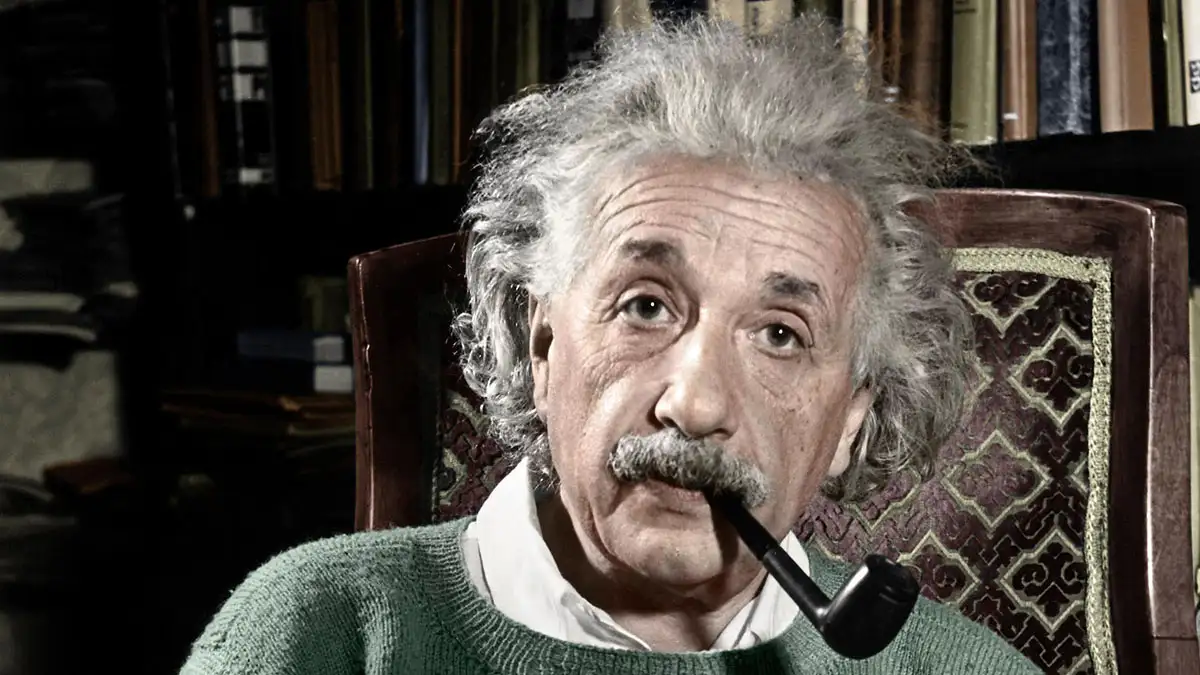
Albert Einstein is one of the most famous scientists in history. His name is often connected with genius, imagination, and groundbreaking ideas. But Einstein was more than just a brilliant physicist. He was a curious learner, a creative thinker, and a person who challenged old ways of understanding the world.
For students, Einstein’s life offers an important lesson: learning is not only about memorizing facts. It is also about asking questions, thinking deeply, and staying curious.
Who Was Albert Einstein?
Albert Einstein was born on March 14, 1879, in Ulm, Germany. As a child, he was deeply interested in how things worked. He enjoyed thinking about science, mathematics, music, and the mysteries of nature.
Although many stories describe Einstein as a poor student, this is not entirely accurate. He was especially strong in mathematics and physics. However, he did not always enjoy strict school systems that discouraged independent thinking.
This independent way of thinking later helped him develop some of the most important scientific ideas of the modern world.
His Most Famous Idea: The Theory of Relativity
Einstein is best known for his Theory of Relativity, which changed how scientists understand time, space, gravity, and motion.
One of his most famous equations is:
E = mc²
This equation shows the relationship between energy and mass. It became one of the most recognized formulas in science.
Einstein’s work helped explain that time and space are not as fixed as people once believed. His ideas opened new doors in physics and influenced many areas of science and technology.
A Scientist With Imagination
Einstein once emphasized the importance of imagination in learning and discovery. He believed that creativity played a big role in science.
This is a valuable reminder for students. Studying is not only about getting the right answer. It is also about understanding ideas, exploring possibilities, and learning how to think.
Einstein used thought experiments, questions, and imagination to explore complex scientific problems. His curiosity helped him see the world differently.
Challenges and Perseverance
Einstein did not become successful overnight. He faced academic, professional, and personal challenges. Early in his career, he worked at a patent office while continuing to develop his scientific ideas.
His story shows that progress often takes patience and persistence. Even when success is not immediate, consistent effort and curiosity can lead to meaningful achievements.
Why Einstein Still Matters Today
Albert Einstein’s ideas continue to influence science, education, and technology. His work contributed to developments in physics, astronomy, energy research, and modern scientific thinking.
Beyond science, Einstein is remembered for encouraging independent thought, peace, and intellectual freedom. His life reminds us that asking questions can be just as important as finding answers.
Lessons Students Can Learn From Einstein
Students can learn many valuable lessons from Einstein’s life:
- Stay curious. Great learning begins with questions.
- Think independently. Do not be afraid to explore new ideas.
- Be patient. Success often requires time and effort.
- Use imagination. Creativity can help solve difficult problems.
- Keep learning. Education is a lifelong journey.
Conclusion
Albert Einstein changed the way people understand the universe. His discoveries made a lasting impact on science, but his attitude toward learning is just as inspiring.
For students preparing for exams or building study habits, Einstein’s story is a powerful reminder that curiosity, perseverance, and critical thinking can lead to growth. Whether in science, mathematics, or everyday learning, the spirit of inquiry can help every learner reach their potential.